![Physio Website Template [Live Version]](https://assets.cdn.filesafe.space/vFFXeKkCKb1ngqt2NXoN/media/6471b3493a6f207217b806dc.png)
![Physio Website Template [Live Version]](https://images.leadconnectorhq.com/image/f_webp/q_80/r_1200/u_https://assets.cdn.filesafe.space/vFFXeKkCKb1ngqt2NXoN/media/647111ad97cbd05aa2b10fda.jpeg )
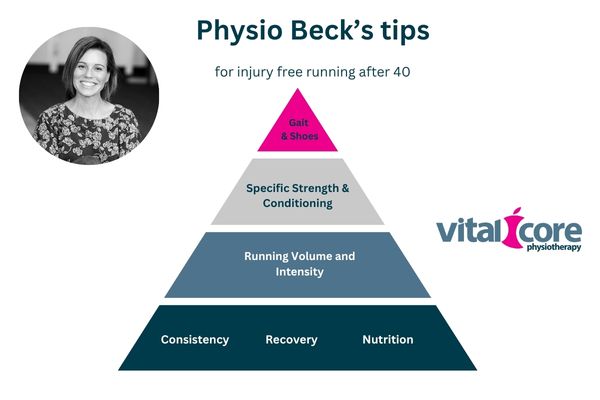
Injury Prevention for Runners | Expert Tips to Stay Injury-Free
Running is one of the most accessible forms of exercise, but it also comes with a significant risk of injury. Research suggests that up to 50% of runners experience an injury each year, with most injuries occurring due to training errors, inadequate recovery, poor load management, or a lack of strength training.
The good news? Most running injuries are preventable.
Whether you're training for a 5km, half marathon, marathon, or simply running for fitness, understanding how to manage your workload, prioritise recovery, and build strength can dramatically reduce your injury risk while improving performance.
At Vital Core Physio, we work with runners of all ages and abilities. The runners who stay healthy aren't necessarily the most talented, they're usually the ones who train consistently, recover well, and increase their training loads gradually.
Injury Prevention for Runners: The Key Factors That Matter Most
1. Consistency Beats Intensity
One of the biggest mistakes runners make is doing too much, too soon.
Many injuries occur when runners suddenly increase their training volume or intensity in pursuit of a personal best or upcoming event. The body adapts to training gradually, and tissues such as tendons, muscles, and bones need time to become stronger.
The most successful runners focus on consistency over months and years rather than chasing short-term gains.
When it comes to injury prevention, consistent training almost always beats sporadic hard training.
2. Manage Your Training Load
Training load refers to the total amount of stress placed on your body through running.
This includes:
Weekly kilometres
Number of running sessions
Intensity of sessions
Hills and terrain
Strength training and other exercise
Load management is one of the most important factors in preventing running injuries.
Rather than making large jumps in distance or intensity, successful runners build progressively and allow time for the body to adapt. This gradual approach helps reduce the risk of common injuries such as Achilles tendinopathy, plantar fasciopathy, shin pain, runner's knee, and stress injuries.
3. Prioritise Recovery
Recovery is often the most overlooked aspect of injury prevention.
Every training session creates microscopic stress within muscles, tendons, bones, and connective tissues. Recovery is when the body repairs this damage, rebuilds stronger tissues, restores energy stores, and adapts to the training stimulus.
Many runners believe fitness is built during training. In reality, fitness is built during recovery.
Without adequate recovery, the body remains in a state of breakdown rather than repair, increasing the likelihood of fatigue, declining performance, and injury.
Simple recovery strategies include:
Prioritising sleep
Taking planned rest days
Scheduling lighter training weeks
Eating enough to support training demands
Managing stress
Why Recovery Matters More for Female Runners Over 40
For women entering perimenopause and menopause, recovery becomes even more important.
Changes in oestrogen levels can affect tendon health, muscle recovery, bone density, sleep quality, and overall resilience to training loads.
Many women notice they can still perform at a high level, but they often require more recovery between harder sessions than they did in their 20s and 30s.
Allowing extra recovery is not a sign of weakness. It is a smart training strategy that keeps you healthy and running consistently.
4. Strength Training Reduces Injury Risk
If there is one thing most runners could benefit from, it's strength training.
Running places forces of up to two to three times body weight through the lower limbs with every stride. Strong muscles help absorb these forces and reduce stress on tendons, joints, and bones.
A well-designed strength program can:
Improve running efficiency
Reduce injury risk
Improve tendon resilience
Increase muscle strength
Support bone health
Improve performance
This becomes particularly important for runners over 40, where maintaining muscle mass and tendon health becomes increasingly challenging.
5. Build Volume Before Speed
Many runners introduce speed sessions before their bodies have adapted to regular running.
A better approach is to establish a solid base of consistent, easy running before adding harder workouts.
Easy running develops the aerobic system, improves tissue capacity, and allows the body to tolerate greater training loads in the future.
Once a strong foundation is established, speed and intensity can be added safely and effectively.
6. Fuel Your Body Properly
Under-fuelling is an increasingly common contributor to running injuries.
Runners need adequate energy intake to support:
Recovery
Muscle repair
Hormone function
Bone health
Training adaptations
This is particularly important for female runners who may be unintentionally under-eating while trying to manage body weight.
Adequate protein, carbohydrates, healthy fats, and hydration all contribute to injury prevention and improved performance.
7. Listen to Early Warning Signs
Most running injuries do not appear overnight.
The body usually provides warning signs such as:
Persistent soreness
Morning stiffness
Localised tendon pain
Reduced performance
Ongoing fatigue
Niggling discomfort that worsens during or after running
Addressing these issues early often prevents them progressing into a more significant injury.
Don't ignore symptoms in the hope they will simply disappear.
Training Smarter Is the Best Injury Prevention Strategy
The goal of training is not to complete one great session.
The goal is to stay healthy enough to complete hundreds of sessions over months and years.
Runners who remain injury-free tend to focus on the fundamentals:
✅ Consistent training
✅ Progressive load management
✅ Quality recovery
✅ Strength training
✅ Proper nutrition
✅ Early management of symptoms
These principles are particularly important for female runners over 40, where recovery and strength become essential components of long-term running success.
How Vital Core Physio Helps Runners Stay Injury-Free
At Vital Core Physio, we help runners understandwhyinjuries occur and, more importantly, how to prevent them.
Whether you're training for your first 5km, preparing for a marathon, returning from injury, or navigating the challenges of running through perimenopause, our team can help you build a sustainable plan that keeps you running for the long term.
Our approach focuses on:
Running injury prevention
Load management
Strength and conditioning
Return-to-running programs
Perimenopause and women's health
Performance optimisation
The best injury rehabilitation plan is the one you never need. By training smarter, recovering properly, and addressing problems early, most runners can continue to enjoy running for many years to come.
Ready to stay injury-free and run with confidence? Contact Vital Core Physio and let us help you build a stronger, more resilient running body.

Ask a question of Vital Core Physiotherapy
Fill in the form to request a Call From Our Team
One of our team will call you for FREE and answer any questions or concerns you may have about your condition
Where To Find Vital Core Physiotherapy

5/90 Magill Road, Norwood, SA 5067, Australia
Free Parking Available


© 2023 Vital Core Physiotherapy