![Physio Website Template [Live Version]](https://assets.cdn.filesafe.space/vFFXeKkCKb1ngqt2NXoN/media/6471b3493a6f207217b806dc.png)
![Physio Website Template [Live Version]](https://images.leadconnectorhq.com/image/f_webp/q_80/r_1200/u_https://assets.cdn.filesafe.space/vFFXeKkCKb1ngqt2NXoN/media/647111ad97cbd05aa2b10fda.jpeg )
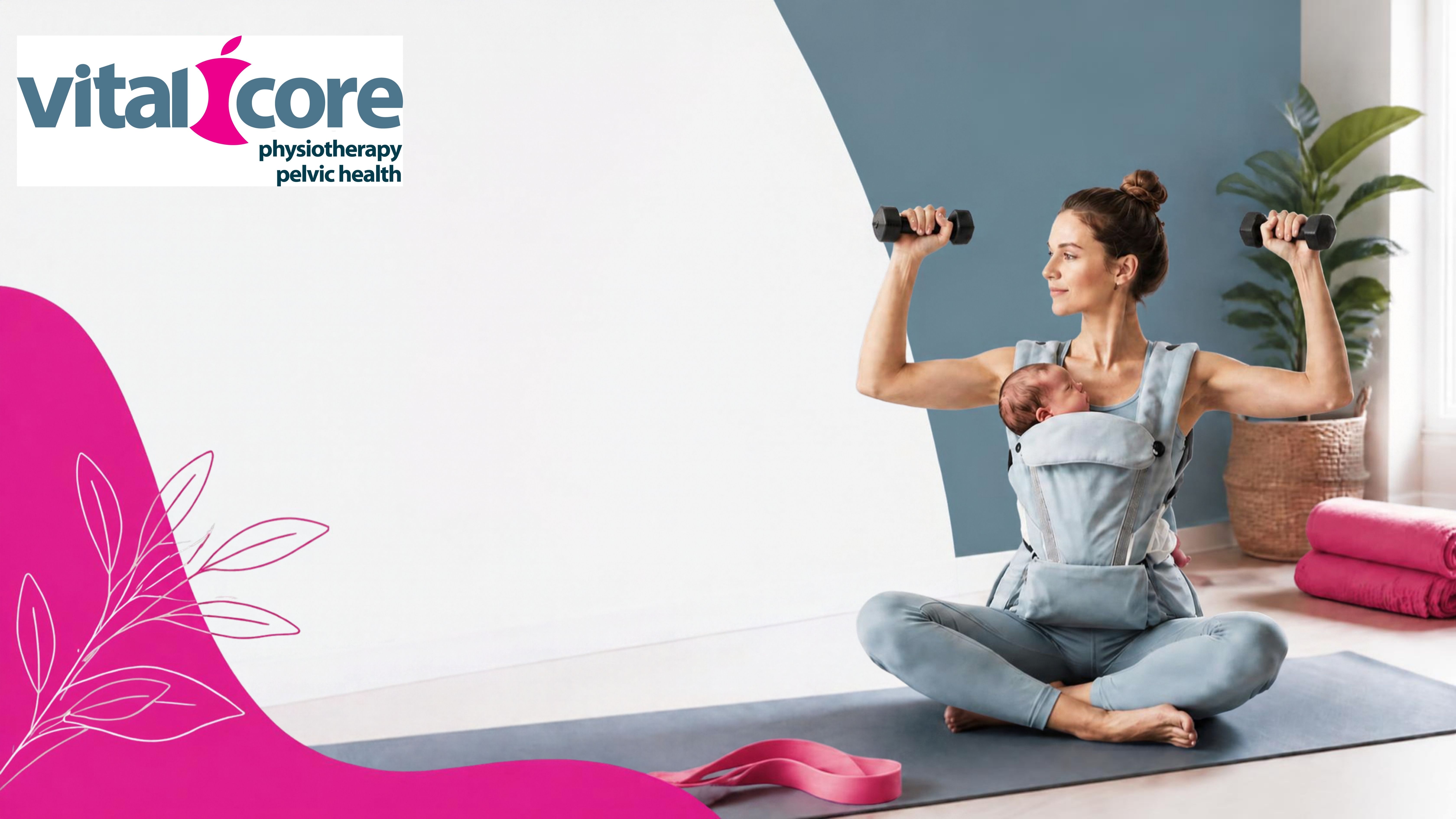
Postnatal Physiotherapy Adelaide | 5 Reasons to See a Physio
Congratulations, you’ve had your baby!
Pregnancy, birth and those first few months with a new baby involve enormous changes for your body. Whether your birth was beautiful, emotional, straightforward, unpredictable or intense, there is no doubt that pregnancy and childbirth are physically demanding.
And just as every pregnancy is different, every postnatal recovery is different too.
Whether you have had a vaginal birth or Caesarean section, a postnatal physiotherapy assessment can help you understand how your body is recovering, address any concerns and help you safely return to the activities you enjoy.
At Vital Core Physiotherapy in Norwood, our Women’s Health Physiotherapists support women throughout pregnancy and their postnatal recovery, including pelvic floor concerns, pain, exercise and returning to normal activity.
Here are five reasons to see a Women’s Health Physiotherapist after having a baby.
1. Postnatal Pelvic Floor Assessment
Your pelvic floor goes through considerable change during pregnancy and childbirth.
The pelvic floor muscles help support the bladder, bowel and pelvic organs and also contribute to bladder and bowel control, sexual function and movement.
During pregnancy, increasing pressure from your growing baby and uterus, together with hormonal and physical changes, can affect the way these muscles function.
After having a baby, some women may experience symptoms such as:
leaking urine when coughing, sneezing, exercising or lifting
difficulty controlling wind or bowel movements
a feeling of heaviness or pressure in the vagina
pelvic discomfort
pain or discomfort during intercourse
difficulty knowing how to correctly activate or relax their pelvic floor
concerns about returning to exercise
These are common concerns, but that doesn't mean you simply have to put up with them.
A postnatal pelvic floor assessment allows your Women's Health Physiotherapist to assess how your pelvic floor is functioning and provide an individualised treatment and exercise plan.
Importantly, pelvic floor rehabilitation isn't simply about doing more pelvic floor exercises. Your physiotherapist can help determine whether your muscles need strengthening, relaxation, improved coordination or a combination of strategies.
Vital Core's pelvic floor physiotherapy services include assessment and treatment for concerns such as incontinence, prolapse and pelvic pain.
2. Bladder and Bowel Health After Having a Baby
Bladder and bowel habits can change during pregnancy and after childbirth.
In the early postnatal period, factors such as changes in routine, reduced activity, altered eating habits and the physical effects of pregnancy and birth can all influence bladder and bowel function.
You might experience:
constipation or difficulty emptying your bowel
urinary leakage
urinary urgency
difficulty emptying your bladder
discomfort when going to the toilet
reduced bladder or bowel control.
You don't need to feel embarrassed about talking about these issues. They are exactly the sort of concerns our pelvic floor physiotherapists discuss with women every day.
A Women's Health Physiotherapist can assess what may be contributing to your symptoms and provide practical, individualised strategies to help improve bladder and bowel function.
Sometimes a few relatively simple changes can make a big difference.
3. Abdominal Separation and Core Recovery After Pregnancy
"I've got abdominal separation. Is that bad?"
This is one of the questions we commonly hear from new mums.
Diastasis rectus abdominis, sometimes called DRAM, diastasis recti or abdominal separation, refers to changes in the connective tissue between the two sides of your rectus abdominis muscles.
During pregnancy, your abdominal wall needs to adapt to make room for your growing baby. Changes to the width and tension of the tissue through the centre of your abdomen are therefore a normal part of pregnancy.
After your baby arrives, your abdominal wall continues to recover.
Rather than focusing solely on the size of the "gap", your physiotherapist can assess how your abdominal muscles are functioning and how well you can generate and control force during the tasks that are important to you.
That might be:
getting on and off the floor with your baby
lifting a baby or toddler
pushing a pram
returning to Pilates
lifting weights
running
returning to sport.
We also want to reassure women that having an abdominal separation does not automatically mean that you will develop back pain, pelvic floor problems or incontinence.
A postnatal physiotherapy assessment can help identify your individual strengths and areas that may benefit from rehabilitation.
Your Women's Health Physiotherapist can then develop a progressive postnatal core strengthening program that helps you feel strong and confident again.
4. Returning to Running, Gym and Exercise After Birth
When can I start exercising again?
Can I go for a run?
When can I lift weights?
Is it safe to return to the gym or HIIT?
These are some of our favourite questions because helping women return to exercise is an important part of postnatal physiotherapy.
There isn't one exercise program that is right for every woman after having a baby.
Your recovery will depend on many individual factors, including your pregnancy, birth, current symptoms, previous exercise history and what you actually want to get back to doing.
For one mum, the goal might be walking comfortably around the block.
For another, it could be returning to running, hiking, dancing, Pilates, the gym, HIIT or competitive sport.
A postnatal physiotherapist can assess areas including your strength, pelvic floor function, abdominal function, symptoms and exercise capacity, then help you gradually build towards your goals.
At Vital Core, we believe returning to exercise after having a baby should be about more than simply being told what not to do.
We want to help you understand what youcando and give you a clear pathway towards feeling strong, capable and confident in your body again.
We can provide an individualised exercise and rehabilitation program and, for women who enjoy exercising with others, you can also ask us about our MumFit exercise classes.
5. Postnatal Pain and C-Section Scar Management
Looking after a baby can be surprisingly physical!
Feeding, carrying, settling, lifting capsules and prams and spending long periods in the same position can contribute to aches and pains.
Common postnatal problems can include:
neck and shoulder pain
upper and lower back pain
wrist and thumb pain
pelvic or hip pain
discomfort associated with feeding or carrying your baby.
A physiotherapist can assess your pain and develop a treatment plan that may include hands-on treatment, exercises, strengthening and practical advice around feeding, lifting, carrying and everyday parenting tasks.
What about a C-section scar?
If you have had a Caesarean birth, you may also have questions or concerns about your scar and abdominal recovery.
Once appropriate for your stage of healing, a Women's Health Physiotherapist can assess the scar and surrounding tissues and provide advice on scar management and movement.
We can also help you progressively rebuild abdominal strength and confidence as you return to everyday activity and exercise.
When Should I See a Postnatal Physiotherapist?
You don't need to wait until something is "wrong" before seeing a Women's Health Physiotherapist.
A postnatal physiotherapy appointment can be useful simply to check how your recovery is progressing and to answer questions about your pelvic floor, abdominal muscles and return to exercise.
An assessment can be particularly helpful if you're experiencing:
urinary or bowel leakage
vaginal pressure or heaviness
pelvic floor concerns
constipation or difficulty emptying
pelvic, back, hip or abdominal pain
pain with intercourse
concerns about abdominal separation
C-section scar discomfort
difficulty returning to exercise
uncertainty about when or how to return to running, gym or sport.
Most importantly, your postnatal recovery does not need to look the same as anyone else's.
Postnatal Physiotherapy in Norwood, Adelaide
Having a baby places incredible demands on your body, and it's easy for your own recovery to become secondary when your attention is focused on looking after your new baby.
But looking after yourself matters too.
At Vital Core Physiotherapy in Norwood, our Women's Health Physiotherapists can help you understand how your body is recovering and develop a treatment and exercise plan specific to you.
Whether your goal is to feel comfortable walking around the block, stop bladder leakage, improve your pelvic floor, rebuild abdominal strength or return to running and the gym, we're here to help.
Our aim isn't just to get you "back to normal".
We want to help you feel strong, confident and capable in your body again.
Ready to book your postnatal physiotherapy assessment?
Contact our friendly Vital Core team on (08) 8331 0552 orbook an appointment online.
We'd love to support you through your postnatal recovery

Ask a question of Vital Core Physiotherapy
Fill in the form to request a Call From Our Team
One of our team will call you for FREE and answer any questions or concerns you may have about your condition
Where To Find Vital Core Physiotherapy

5/90 Magill Road, Norwood, SA 5067, Australia
Free Parking Available


© 2023 Vital Core Physiotherapy