![Physio Website Template [Live Version]](https://assets.cdn.filesafe.space/vFFXeKkCKb1ngqt2NXoN/media/6471b3493a6f207217b806dc.png)
![Physio Website Template [Live Version]](https://images.leadconnectorhq.com/image/f_webp/q_80/r_1200/u_https://assets.cdn.filesafe.space/vFFXeKkCKb1ngqt2NXoN/media/647111ad97cbd05aa2b10fda.jpeg )
Patellar Tendon Pain (Jumpers Knee)
What is Patellar Tendon pain?
Patellar tendon pain comes from the patellar tendon, an important structure which sits just under the kneecap. This tendon helps the leg produce power when an athlete jumps, lands, sprints, cuts, or pushes off strongly.
Patella Tendon Pain is usually felt:
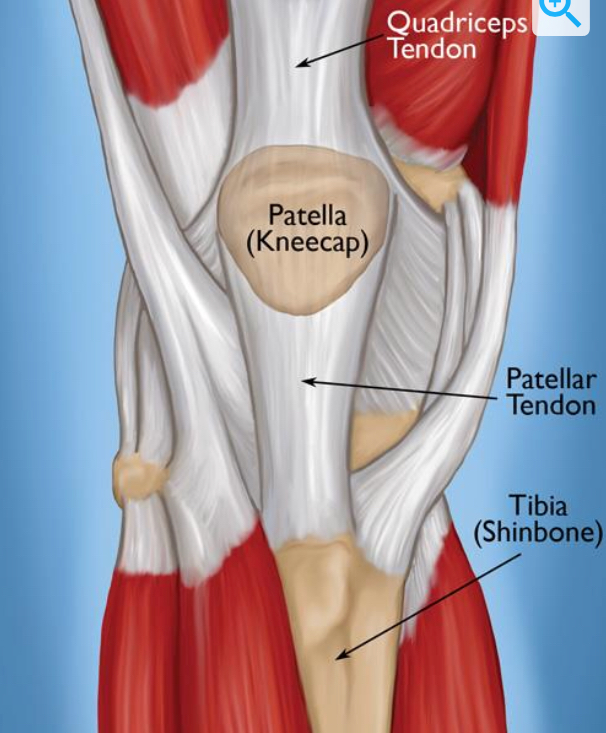
Just below the kneecap - in an isolated spot.
Usually after a session or match with a lot of explosive movements
Often it is painful at the beginning of a session and then seems to 'warm up' but is sore again later once the athlete has cooled down. Because of this, athletes may think: “If I warm up properly, it’s fine.” This is common - but it is actually an early warning sign that the tendon is under too much stress.
What activities usually cause pain?
Patellar tendon pain is linked to high load, powerful movements such as;
Jumping and landing
Hopping
Explosive take off (e.g. from a deep squat)
Sprinting
Fast cutting or sudden changes of direction
Who is most affected?
From the above activities you can probably recognise the sports that this condition is common in;
Basketball
Netball
Volleyball
AFL
Soccer
Cheer
Gymnastics
Why does it happen?
Patellar tendon pain and injury develops when the tendon is made to handle more load than it can cope with, usually over a time frame of at least 4-6 weeks. This can happen with:
• Big increases in training or games - such as start of season or when adding in additional sports/ team (school, club, rep)
• Lots of jumping with limited recovery - excessive plyometric training.
• Reduced strength in the legs or hips
• Poor landing or movement control
Your Vital Core physiotherapist will:
• Ask about training load and pain patterns to determine a correct diagnosis
• Assess leg strength and movement
• Watch tasks like squatting, hopping, or jumping
Important to note, scans are usually not needed, especially early on.
How is it treated?
General structure of management is;
Decrease the tendon pain
Increase the tendon capacity
Ensure the athlete is using good general movement mechanics to prevent aa reoccurrence or other structures becoming sore.
Key parts of treatment:
Load management: explosive activities may be reduced temporarily often by as little as 10%.
Strength exercises: the most important part of recovery. Usually the athlete will be given strength exercises day 1.
Gradual return: slowly adding back all of the required jumping and sprinting taking care not to aggravate the tendon too much.
Straps, bands, and taping
Many junior athletes especially basketball players wear: a patellar tendon strap or band or tape under the kneecap which goes across the tendon. These supports can temporarily reduce pain during sport. However, it is very important to know that needing a strap or tape is a sign the tendon is injured and it does not fix the tendon. Ongoing use means proper treatment is needed. Straps/tape can be useful short term, but they should not replace rehabilitation.

Ask a question of Vital Core Physiotherapy
Fill in the form to request a Call From Our Team
One of our team will call you for FREE and answer any questions or concerns you may have about your condition
Where To Find Vital Core Physiotherapy

5/90 Magill Road, Norwood, SA 5067, Australia
Free Parking Available


© 2023 Vital Core Physiotherapy